 English
 Deutsch
 Spanish
 Russian
 Italian










We use cookie to improve your experience on our site. By using our site you consent cookies. Learn more

Fill in the form to get detailed information and make an appointment, we will contact you.
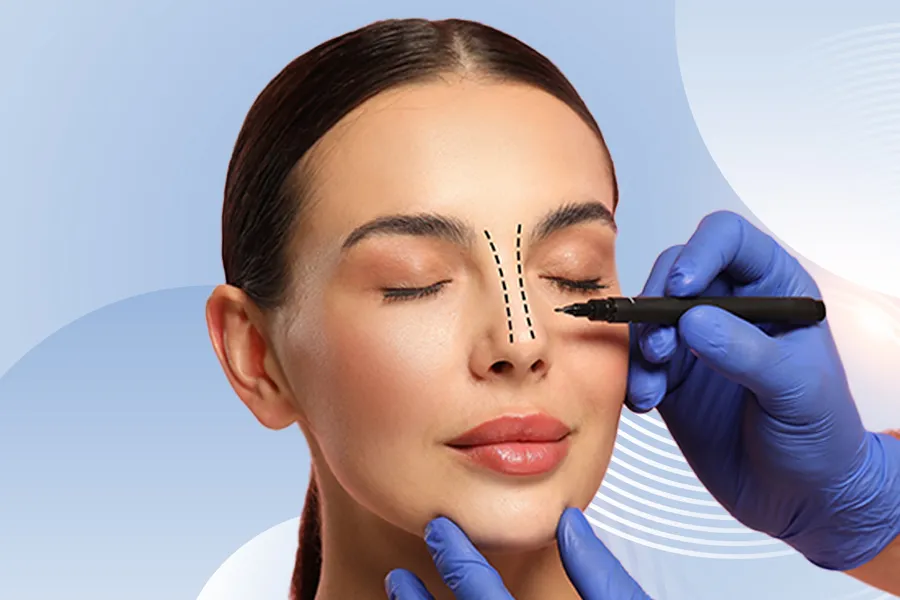
Ethnic rhinoplasty is a personalised nose reshaping procedure designed for patients from diverse ethnic backgrounds. Unlike a standardised approach to nose surgery, ethnic rhinoplasty considers the patient's individual facial features, nasal anatomy, skin characteristics and aesthetic goals.
The aim is not to create a predefined nose shape, but to achieve better facial harmony while respecting the patient's natural features and identity.
At Gözde International Hospitals, each ethnic rhinoplasty procedure is individually planned following a detailed medical consultation and evaluation.
Ethnic rhinoplasty is a specialised approach to nose surgery that takes into account the unique anatomical and aesthetic characteristics of each patient.
Nasal structure, skin thickness, cartilage strength, nasal width and facial proportions can vary significantly between individuals. For this reason, the surgical approach is determined according to the patient's anatomy rather than following a single standard technique.
Depending on the patient's needs, ethnic rhinoplasty may address the nasal bridge, nasal tip, nostrils, nasal width, projection or overall nasal proportions.
The goal is to create a balanced result that complements the patient's existing facial features.
The main difference is the level of individualisation involved in treatment planning.
Ethnic rhinoplasty considers the patient's natural facial characteristics rather than aiming for a standardised nose shape. The surgeon evaluates the relationship between the nose and the rest of the face before determining which changes may be appropriate.
The procedure may involve reshaping or repositioning bone and cartilage, refining the nasal tip, adjusting the nasal bridge or modifying the nostrils, depending on the individual treatment plan.
The aim is to improve nasal proportions while maintaining an appearance that remains appropriate for the patient's face.
Ethnic rhinoplasty may be considered for a range of aesthetic and structural concerns, including:
The exact changes that can be achieved depend on the patient's nasal anatomy, facial proportions and surgical assessment.
Ethnic rhinoplasty may be considered by adults who wish to change certain aspects of their nose while maintaining harmony with their existing facial characteristics.
During the consultation, the surgeon evaluates the patient's general health, nasal anatomy, facial proportions, breathing function, previous surgeries and aesthetic expectations.
Patients should have realistic expectations about what surgery can achieve. The appropriate surgical plan is determined individually following medical assessment.
Before surgery, the patient undergoes a detailed consultation and examination. The surgeon evaluates the nasal structure, facial proportions, skin characteristics and breathing function.
Ethnic rhinoplasty is usually performed under general anaesthesia. Depending on the patient's anatomy and treatment plan, the surgeon may reshape bone and cartilage, refine the nasal tip, modify the nasal bridge or make changes to the nostrils.
If structural problems are affecting breathing, functional corrections may also be considered.
The surgical technique and extent of treatment vary from patient to patient.
Recovery after ethnic rhinoplasty is similar to other forms of rhinoplasty, although the healing process varies between individuals.
Swelling, bruising and temporary nasal congestion may occur during the initial recovery period. A nasal splint may be used and is commonly removed after approximately one week, depending on the surgeon's instructions.
Many patients gradually return to everyday activities within the first few weeks. However, swelling can continue to decrease for several months as the nasal tissues heal.
First week:
Swelling, bruising and nasal congestion are common. A nasal splint may be used.
2–3 weeks:
Visible bruising and swelling generally begin to decrease.
1–3 months:
The nose continues to settle as swelling gradually reduces.
Several months:
The nasal tissues continue to heal and the final appearance becomes increasingly refined.
The exact recovery timeline varies according to the individual patient and the extent of surgery.
The results of ethnic rhinoplasty develop gradually as swelling decreases and the nasal tissues heal.
The final appearance depends on several factors, including the patient's anatomy, skin characteristics, surgical technique and individual healing process.
The goal is to achieve improved nasal proportions and facial harmony while preserving the patient's natural facial characteristics.
For patients travelling to Turkey, ethnic rhinoplasty involves more than the surgical procedure itself. Medical assessment, hospital care, postoperative monitoring and follow-up are important parts of the treatment journey.
The process generally includes:
1. Initial consultation
The patient's expectations, medical history and treatment goals are reviewed.
2. Medical assessment
The surgeon evaluates the nasal structure, facial proportions and breathing function.
3. Treatment planning
The surgical approach is determined according to the patient's individual anatomy and desired changes.
4. Surgery and hospital care
The planned procedure is performed in a hospital setting, followed by postoperative medical care.
5. Recovery and follow-up
The patient receives postoperative instructions and follow-up support before returning home.
The recommended length of stay depends on the individual treatment plan and recovery.
Turkey is a destination for international patients seeking cosmetic and reconstructive procedures, including rhinoplasty.
Patients travelling from abroad should consider the complete treatment process, including medical evaluation, hospital care, postoperative monitoring and follow-up.
At Gözde International Hospitals, international patients receive support throughout their treatment journey, from the initial consultation to hospital care and postoperative guidance.
At Gözde International Hospitals, ethnic rhinoplasty is planned according to each patient's individual facial proportions, nasal anatomy, skin characteristics, breathing function and aesthetic expectations.
Rather than applying a standardised nose shape, the treatment plan is developed according to the patient's individual features and desired outcome.
The process begins with a medical consultation and examination. Based on the surgeon's clinical assessment, the appropriate surgical approach and treatment plan are determined.
International patients can also receive support with treatment coordination, hospital arrangements and postoperative guidance.
A medical consultation is an essential step in determining whether ethnic rhinoplasty is suitable and what type of surgical approach may be appropriate.
During the consultation, patients can discuss:
The surgeon can then explain the available options, potential risks, expected recovery and the most appropriate approach for the individual case.
Every ethnic rhinoplasty procedure is different. A personalised medical assessment is required before a treatment plan can be recommended.
Rhinoplasty is a surgical procedure and, like any surgery, carries potential risks. Patient safety depends on factors including the patient's health, surgical planning, the surgeon and the hospital environment. A detailed medical assessment is performed before treatment.
The recommended length of stay depends on the individual treatment plan and recovery. International patients should allow sufficient time for surgery, postoperative monitoring and the first follow-up appointment before travelling home.
Yes. International patients can discuss their expectations, medical history and treatment goals during an initial remote consultation. The medical team can then advise what additional medical information or examination may be required.
Ethnic rhinoplasty is a specialized approach tailored to the unique nasal anatomy, thicker skin, and distinctive facial proportions of patients of African, Asian, Middle Eastern, or Hispanic descent. Rather than creating a standardized Western nose, the goal is to enhance facial harmony while preserving the patient’s ethnic identity and natural heritage.
Thicker skin can temporarily cushion the underlying bone and cartilage refinements, meaning post-operative swelling takes longer to completely subside compared to thin-skinned noses. Our surgeons use strong cartilage grafting to provide clear structural definition, with final results settling over 12 to 18 months.
In many ethnic noses, the nasal bridge is naturally flat and the tip cartilage is softer. Cartilage grafts are often necessary to build height, support the tip, and achieve clear definition. The surgeon first utilizes the patient's own septal cartilage; if additional support is needed, natural ear or rib cartilage is safely harvested.
Rebecca

November 29 2024
Gastric Sleeve surgery Gözde international hospital Izmir.
I am 12 days post op from having had gastric sleeve surgery in Turkey. My experience was positive overall and I received great care while in Izmir. My coordinator Devrim has been amazing from the beginning of the process and I’ve been able to message him at anytime for information and reassurance. I am genuinely grateful to my surgeon and all the staff at Gözde and I am looking to the future as a healthier and happier skinnier version of myself!
LIANNEH
December 02 2024
Went to Baypark
Went to Baypark, Istanbul 3 weeks ago and I can’t fault it. All the staff and the surgeon were spot on. The care I received was amazing and the surgeon came and checked on me every day. From start to finish any questions I had were answered by Ata or Selin. Would definitely recommend
Sophie
November 18 2024
My experience
I had my nose a year ago in Izmir by the lovely and very talented Dr. Damla Nihan Özdemir, the hospital was state of the art, it was run smoothly and I felt in safe hands. You also get a chaperone who helps explain things and sorts out transportation etc, mine was Batuhan Yetki who was lovely.
I would highly recommend this hospital and surgeon to others.
Sarah Marshall
June 08 2024
Went to Gözde Hospital in June of this year...
Went to Gözde Hospital in June of this year and experienced a gastric sleeve, I felt that Dr. Mehmet Denis and his team were amazing, everything was explained and all of my care and support needs were met as well as accommodating my husband, no concerns. I have lost 5 stone in 6 months, so I am very pleased, no regrets at all.
Kirsty Halstead
February 10 2025
I had a very good experience using…
I had a very good experience using Gözde. I chose Özel Sağlık, which was a lovely hospital, spotless, and the staff there are amazing. My doctor was Dr. Ergin Arslan, whom I can't recommend enough. Peril was my coordinator and was always, and still is, on hand to help each time I message. I would definitely recommend.
Ray
July 17 2025
Dr Ahmet Aşçıoğlu
Dr Ahmet Aşçıoğlu done my tummy tuck and breast uplift what an amazing surgeon my scars are nearly invisible already it's week 4 I would advise anyone to go with this surgeon and gözde hospital is like a 5 star hotel I was amazed it don't look like a hospital and very clean 5 stars from me his assistant Erva is lovely very caring always there when you need her she don't stop bless her she's always on the go she made me feel so comfortable xxx
Patient
August 20 2026
It's been two weeks since Dr Deniz...
It's been two weeks since Dr Deniz operated on me and gave me a gastric sleeve. I have lost 5kg (11lb). I feel perfectly fine, everything is healing well.
the hospital was great. Loads of space, super friendly nurses and staff. Burcin was my medical coordinator and she was absolutely brilliant, she organised everything for me and provided me a lot of reassurance.
Victor was waiting at the hospital for me when I arrived, and he helped me navigate for all my tests and translated everything for me, he was brilliant. Absolutely wonderful gent.
If I had to go back and consider doing this again, I would 100000% do it. I was terrified, but actually I was in really good hands.
Thank you Dr Deniz, Victor, Burcin, all the nurses on floor 4, the dietician and everyone. It will really change my life for the better.
Nikita Badesha
August 20 2026
Amazing experience from start to finish
I recently had my rhinoplasty in Izmir and I can honestly say the entire experience exceeded my expectations.
From the beginning, my coordinator Alp was fantastic — very patient, quick to respond, and always available to answer any questions. Communication was clear and consistent throughout, which really helped put me at ease.
When we landed, everything was well organised. We were contacted about our transfer straight away and only waited around 5–10 minutes before getting on a minibus. The process was smooth, with some people dropped at the hotel and others at the hospital.
I stayed for 5 days, and the hotel was perfect for recovery — clean, spacious, and in a great location with plenty of food options and supermarkets nearby. Room service was also reasonably priced, which was really convenient.
The hospital itself was amazing — very modern and felt more like a hotel than a typical UK hospital. My surgeon was professional and reassuring, with open communication during my consultation, and checked on me the following day.
The nurses were extremely attentive, checking on me regularly (even during the night), and although there was a slight language barrier at times, the level of care was excellent.
One of my biggest concerns beforehand was feeling unsupported after surgery, but that wasn’t the case at all. Communication via WhatsApp remained consistent, and I was always kept informed about timings and next steps.
All medication was provided before discharge (included in the price), along with clear aftercare instructions and a fit-to-fly note.
Since returning home, my recovery has gone really smoothly with no issues. Whenever I’ve had questions, Alp has continued to respond quickly, which has been very reassuring.
I was initially hesitant because the price seemed almost too good to be true, but I can honestly say the quality of care and service is outstanding.
I would highly recommend Gozde to anyone considering rhinoplasty — choosing my surgeon was the best decision I’ve ever made
Kristina Jaufmann
August 20 2026
Simply great, there's nothing to criticize…
Simply amazing, there's nothing to criticize, I'm just so happy! Beautiful clinic, beautiful hotel, lovely people, great team – I can only recommend it!
Chloe Galvin
August 20 2026
Burcin was really friendly and...
Burcin was really friendly and professional, she answered all of my questions in detail and made the booking process nice and easy. I would recommend booking through this company and especially recommend Burcin.
Stacey Allsop
August 20 2026
Gastric Sleeve at Baypark Hospital
I travelled to Turkey for my gastric sleeve surgery and I honestly couldn’t be happier with my experience. From the very first contact, everything was organised, clear, and reassuring. The coordinator Alp kept in touch throughout and answered all my questions, which really helped put me at ease before travelling.
The hospital was clean and professional, and the medical team were outstanding. The surgeon was knowledgeable, thorough, and took the time to explain the procedure and aftercare clearly. I felt safe and well cared for at all times. The nurses were kind, attentive, and supportive, especially during recovery.
The pre-operative tests and assessments were very thorough, which gave me complete confidence that my safety and health were the top priority.
The aftercare advice and follow-up support have also been excellent.
I’m so glad I chose to have my gastric sleeve done in Turkey and would highly recommend this experience to anyone considering weight loss surgery. Thank you to the whole team for changing my life.
Faye Martin
August 20 2026
Can't recommend this Hospital enough.
Can't recommend this Hospital enough. They've really helped me over the years. My coordinator Alp has been in contact with me since my journey began 3 years ago until this day we still speak. He started helping me with my sleeve 3 years ago right upto my thigh lift, arm lift and breast Augmentation in January this year. Alp has been there with me supporting my whole journey. He's provided me with information when ever I've asked and has always reassured me when I haven't felt so great. He really is so helpful and now feels like a true friend to me. My surgeons Dr Mehmet Deniz (for Sleeve) and Dr Ahmet Aşçıoğlu (for cosmetics) were fantastic and I'd highly recommend them if anyone is thinking about any of these surgeries. My surgeons are also so helpful and I"m able to contact them even now if I have any questions and they always respond. This hospital has changed my life and I will always be extremely grateful for their help and for the way they looked after me. I also have to say that Viktor and Ceren Karahan the coordinators at the hospital are so friendly and helpful and are good fun.
Highly recommend contacting Alp for help if you're thinking of any surgery. He's brilliant
Samantha nehumba
August 20 2026
Gozde Baypark Instabul
I had Burcin as my coordinator. I honestly cannot fault her she was heaven sent. She kept on checking on my progress and responded to my quiries in times. Many thanks to my surgeon Dr Zafer Cenk Koyuncu and BayPark medical team . Am forever grateful.
Dennis Schmellenkamp
August 20 2026
THANK YOU TO THE ENTIRE GÖZDE TEAM AND EVERYONE ASSISTED WITH US!!!
I would like to sincerely thank you for your personal and professional work/advice and also for your genuine human support. Duygu, thank you again from the bottom of my heart; it couldn't have gone better. Absolutely top-notch from beginning to end of the trip. Nothing more is needed, and in my opinion, it couldn't have been better. DUYGU, I'M HAPPY TO SAY IT AGAIN: THANK YOU SO MUCH. Hussein, the interpreter from the hospital, also handled everything perfectly down to the last detail and was always available and very friendly and helpful in dealing with everything involved. The same goes for Dr. Serkan Gökpinar; you were absolutely top-notch. I thank you from the bottom of my heart as well.THANK YOU FOR EVERYTHING.
Tony Paduraru
August 20 2026
I had gastric sleeve at their Izmir premium hospital Ozel Saglik
I had gastric sleeve at their Izmir premium hospital Ozel Saglik. I had done quite a few researches about the procedure in Turkey. In March, I found out that the Izmir hospital has a tour in UK. My first options where different hospitals, cheaper, still good options, but I said it wouldn't do any harm to meet a bariatric surgeon in person. The lovely coordinator, Afaf, made an appointment and I met Mr. Arslan, in London. Well, he made me feel like we are old friends, I explained him my other problems and he made me trust himself. It was game over. I've forgot about the other hospitals and he made me go to Izmir. And I don't regret it. The procedure went well, Mr. Arslan even sorted out my umbilical hernia. He is a fantastic surgeon and we still keep in touch. He speaks English, a very important thing. The hospital is well organised, everyone knows what has to do. Afaf, my coordinator, what can I say, she even arranged another consultation for me while there, helped me even after coming back. Fitnat, the transfer coordinator, good as gold. Cahide, what a lovely girl! Viktor, our hospital host, what a lovely guy! Many thanks to the nurses, especially Ella, for the night when my blood pressure went very high. And not for the last, many thanks to the anesthetist. What a lovely lady! I didn't have a chance to thank you her and I regret it. We all pay more attention to the surgeon and we forget how important the anesthetist is, keeping us well and alive during surgery and she made me feel I am in very good hands. Maybe somebody can thank her on my behalf. So, in conclusion, I don't know about other hospitals in Turkey, but this one is a very well organised and NHS would have what to learn from them, regarding efficiency. Their hotel, again, very nice apartments and rooms, lovely staff, fantastic breakfast buffet. Some small suggestions. It will be nice if the drivers wouldn't smoke in the transfer buses. On the arrival, it was a very strong smell of smoking in the transfer van, I nearly feel sick. The night shift nurses should be advised to keep the noise a bit down. They are lovely, but some of them make during the night the same noise level as daytime. The hospital should pay some English courses for them. It will be very helpful,for them and patients, to avoid Google translate. The hospital is lovely, very clean, big, nice rooms, but it will need some small repairs, especially the floor near lifts. The coordinators should be allowed to spend more time with the patients, if needed, after booking and pay the deposit, because some small problems still can appear. Not only my opinion, other patients had the same problem. But, in all, a fantastic experience, I don't regret going there and I think the difference in price is justified.
Jenny
August 20 2026
I'm now 10 weeks post-rhinoplasty...
I'm now 10 weeks post-rhinoplasty and what can I say? Dr. Gökpinar truly has magic hands. I already love the result and it's only going to get better. A thousand thanks to everyone, especially Duygu for the excellent communication and to Hussein, my German manager at the hospital. The hospital and the hotel are both absolutely fantastic – the rooms are super clean and stylish, the food is delicious, and the staff are incredibly friendly. I will definitely have my next surgery done at the Gözde Clinic again.
Maiju Milli
August 20 2026
I recommend this hospital if you are planning to have rhinoplasty!
I had an excellent experience at this hospital and with Dr. Serkan Gökpınar, his assistants, and the medical staff. From start to finish, they took great care of me and monitored everything closely. The surgery went perfectly, everything was well-organized, and I am very satisfied with the result my nose turned out beautiful
Dr. Serkan is a highly skilled and knowledgeable specialist, truly an expert in his field. I can confidently recommend this hospital and this surgeon.
A special thank you to Tenno for helping organize everything, since I was flying in from another country. He stayed in touch the entire time, was always available to answer any questions, and made the whole process much easier.I recommend them, and you can trust them with complete confidence, I spent a long time looking for a good hospital and a surgeon I could truly be satisfied with, and I do not regret my choice. Thank you!
Patient
August 20 2026
Breast lift & implants baypark dr ufuk durgun
I got breast implants and uplift by dr ufuk durgun at baypark hospital on 17th nov. All arrangements started with my lovely coordinator Afaf who was perfect she answered any questions (before and after payments were made) very prompt and was happy to let me take my time making decisions. The travelling was all taken care
Of and it was very efficient. Dr ufuk was wonderful and i love my new breasts! I am healing lovely no issues at all. Every staff member i encountered at baypark were very kind and helpful! There was one lovely lady who didnt speak english wheeling me into the theatre and she must have seen/ sensed my nervousness and rubbed my hand and shoulder to reassure me this kindness was exactly what i needed at the right time!! I felt aftercare was great. Sena from dr ufuks team as well as selin from the godze company were also amazing and i thank each of them for making the experience so great!! If i had one single complaint it would be that the food wasnt to my taste but i am very very fussy so this could be a me problem!!
Stephanie Saunders
August 20 2026
Fantastic from start to finish!
Fantastic from start to finish. They done all the work and were excellent with their communication. I can’t thank them enough for what they have done for me!
Patient
August 20 2026
Afaf is amazing! 2nd time useing this company
This will ne my 2nd time contacting afaf!! Honestly she is the most amazing human, nothing is too much trouble and helps me with all my silly questions. I had my gastric sleeve done hear 15 months ago with the amazing dr arslan, and have zero complications i have just booked to go back to start my plastic surgery journey in January 2026. If anyone is thinking of useing this company you should 100% do it.
Kirsty Browne
August 20 2026
My gastric sleeve experience with Godze
After 2 and a half years of researching and deciding, I finally had my gastric sleeve surgery at Ozel Sağlık hospital on 22nd March 2025.
The process from the beginning was very simple. In my first enquiry I was assigned Tenno as my coordinator. He was attentive and answered every question I had fully. He was patient and didn’t push me to book. From my first communication with him to me actually putting my deposit down 6+ months passed because I wanted to make sure I was making the correct decisions for me.
After booking he again kept me fully informed and answered all of my questions. I first flew to Turkey in January 2025 I was amazed by the depth and amount of pre op tests that were performed on me. The level of care from the nursing team was exemplary!
Unfortunately in January after the endoscopy, a big ulcer and hernia was found in my stomach meaning the surgery would not be performed as it was not safe to do so. I was understandably upset, however Dr Arslan took the time to explain exactly why he couldn’t operate and what my next steps would be. Caomide, was my coordinator at the hospital and she comforted me and assisted me in getting back to the hotel. Nilsu (travel coordinator) and Tenno were again so helpful in getting me home, so I could start the medicine to get the ulcer healed.
When I returned home there was no pressure from Tenno to rebook, he let me do this in my own time. However after seeing the care at Godze, I was eager to get back and booked for 22nd March.
When I returned the excellent care continued, Caomide and Dr Arslan remembered me which was so nice. The nurses were so attentive with medicines. No problems with language barriers (I’m English and don’t know any Turkish apart from merhaba!) I had my fastric sleeve and hernia repair and honestly cannot believe how well I feel afterwards.
I travelled alone with no companion, and would do this again.
I am so happy with my experience and would recommend Godze based on this!
Thank you to Tenno, Nilsu, Caomide, Yaran, Nourman,the whole team at Ozel Sağlık and of course Dr Arslan. Cannot wait for my new life with my new baby stomach!
Trudy Seymour
August 20 2026
Excellent service from start to finish!
Yigit Altinay my contact was so helpful every step of the way. I paid £80 for my £380 flights as agreed. Everything was smooth. No extra costs. I was a little anxious asI travelled alone but I knew that I could contact anyone and would have been supported. My surgery went well and everything was explained to me in depth by my Interpreter, she was so warm and friendly. I was under Dr Ergin and he was excellent. Went over and above to help me with some complicated adhesions from other surgery’s. My medication package given to me was huge and spare dressings. Thank you everyone for your support.
Mellisa Mcfarlane
August 20 2026
I recently had my gastric sleeve…
I recently had my gastric sleeve surgery in Izmir at gozde international hospital and the care I received was absolutely exceptional from start to finish.
My surgeon, Dr. Mehmet Deniz, was fantastic — professional, skilled, and reassuring throughout the entire process. My coordinator, Devrim, was incredible at helping me plan my journey and clearly explained what to expect at every stage of the surgery and was on call 24/7 answering any questions or help I needed. Victoria, my interpreter, was also amazing — kind, patient, and made sure I understood everything perfectly.
The whole team at Gözde Hospital was lovely and looked after me with such care and attention. I felt completely supported and safe during my stay.
I would highly recommend Gözde Hospital and their amazing staff to anyone considering this surgery. Thank you to the entire team for making my experience so positive!
Dorothy Banda
August 20 2026
Highly recommended
I first contacted Devrim through WhatsApp. He walked me through everything. Quick in responding to messages no matter what time it was. Very helpful and easy to follow instructions when it came to payments and booking my plane ticket. When I arrived at Izmir airport, I was met by my transfer who took me straight to the Hospital. All necessary checks were done and I had my procedure the following day. My surgeon was very attentive to detail and answered all my questions with ease. Devrim kept in touch checking how I was. My procedure went well and I am home recovering very well. While at home, Devrim kept checking on how my recovery was. I would recommend Gozde International Hospitals. A hospital well equipped I felt safe and at home. Everyone was very friendly and I was looked after well.
Fatima Lopez
August 20 2026
BEST EXPERIENCE AT GODZE INTERNATIONAL HOSPITALS
I had a Rhinoplasty at Ozel Saglik Hospital this September. Everything from start to finish was clear and professional. To start, my operational coordinator Tenno set up a E-consultation where I had the opportunity to ask any questions I had in mind and everything was answered clearly. He organised my accommodation, flight and hospital stay and even checked in on me after the surgery to make sure I was doing well. The Doctor who performed my surgery was Dr Serkan Gokpinar. He is a really talented and great Dr to say the least. The swelling has not resided yet and I am already to happy with my results. His first priority is health and safety which is so reassuring. Not to mention the nurses, they were great, always checking on me and made me feel very comfortable that I wouldn’t have mind to spend the rest of my trip in my hospital room. Everything was clean, the food and especially the soup was delicious. All in all I had the best experience an international patient could ask for. The Interpreter, transport, Accommodation, Food, Medication.. I can’t communicate how satisfied and pleasant my trip to Izmir was. More than anyone could ask for. As far as recovery, I came out of the surgery and up until today 8 days post OP, I had zero bruising, very minimal swelling (mostly around the nose) and zero pain. I couldn’t have asked for a smoother recovery. Everything was better than I could have asked for. Thank you so much Tenno, Dr Serkan, the nurses, and everyone that made my journey feel so comfortable and I definitely recommend for anyone debating or unsure to go ahead with it!
Charlotte Taylor
August 20 2026
Highly Recommended
I can’t thank everyone at Gozde hospitals enough. Everything from booking my surgery until now (5 weeks post op) I have had brilliant care. I wish I could thank everyone individually. My care coordinator Devrim has answered any questions I’ve had with such a quick and accurate response. My transfer coordinator Fitnat for helping me with my travel. And lastly my amazing surgeon Dr Ahmet Aşçioğlu who has made me the happiest with my amazing results and his consult Berfin who was amazing while I was in the hospital. Thank you to all of the friendly nurses that looked after me during my stay you made my experience pain free and comfortable since the moment I arrived at the hospital. Even the man who did the transfer was so friendly and helpful. I would highly recommend this hospital to anyone and would 100% go back if I wanted any further treatment. Thank you all again!!!
Lynn
August 20 2026
I had gastric sleeve surgery here in…
I had gastric sleeve surgery here in March 2024.
My co-ordinator Atakan was fantastic and i have already recommended Atakan to others, he was great with contacting me with all the details of the packages that the hospital offered, any questions I had he was helpful to answer and put my mind at rest, even after surgery when I returned to England he has been happy to still answer questions for me.
While at the hospital I felt my treatment was better than some I have been to in the UK, pre-op tests were very thorough, I felt safe with the surgical team, my surgeon Dr Yeldan was fantastic so happy i had him to do my operation. Most nurses spoke good English and were more than happy to help me and my companion, my private room had everything I needed, I was sent home with medication and protein shakes.
Fatma G.
August 20 2026
Emre has been so helpful during the...
Emre has been so helpful during the whole process, I had 100 questions and he’s been very informative and reassuring. Main thing for me is consistency and that has really been delivered. So far a great experience. Thank you
Jordyn Boyes
August 20 2026
Thank You Mert
Was recommended mert from gozde hospital by a friend who had previously had surgery here. He was my co ordinator and sorted everything out for me from start to finish.
When i went for my surgery he even came out of hes way to pay me a visit to see how i was doing which he didnt have to do :) still keep in contact and always gets back to me very quick with answers post op.
Thank you mert x
Lianne
August 20 2026
Perfect hospital perfect care
Perfect hospital perfect care. My coordinator was Atakan. Can't thanks enough
Sandii Raithby
August 20 2026
Genuinely Life Changing!
I had Gastric Sleeve Surgery at Gozde Izmir in January 2025 and my experience was brilliant.
My co-ordinator, Mert, was so attentive and helped me handle every part of my booking.
The team at the hospital were nothing short of phenomenal. They never let me down - everything they promised was delivered. I felt really well informed and cared for throughout my stay. The pre-op team, the surgeons Dr Arslan and Dr Kemiskis and the nursing staff were all excellent. Their english was good enough to communicate anything I needed.
The hospital was clean and spacious with decent facilities for my companion and there is a real camaraderie on the ward with your fellow patients.
I had a real wobble because I realised AFTER my op that I had booked by flight a day early so had one day less recovery time and I was panicking I wouldn't get discharged in time, but the team were amazing at calming my nerves.
I have had no issues at all post-op, my incisions have healed beautifully and I have lost 7 stone in 7 months. I can't ask for more really!
Laura
August 20 2026
It was great experience
It was great experience. Everything was good and care was intense. I'd highly recommend this hospital and coordinator Atakan.
Wendy Flynn
August 20 2026
Gastric Sleeve
I wold highly recommend this hospital and team all the staff are absolutely wonderful. I had an amazing service from the moment I booked in March with Medical co ordinator Yunus Emre he was quick to answer any questions or concerns. My travel co ordinator was Nilsu, she made sure all my transfers went smooth. I waa met at Osel Saglik Hospital by a wonderful interpreter Nessa who was with me every step of the way, all my tests wore done in no time. absolutely amazed by this. My surgeon wa Dr Ergin Arslan, he was so nice and gentle. I had very little pain 2 days post op. My dietitian was Ceren Karahan, she made sure I understood all my diet plan and medication and checked in every day. Looking forward now to the beginning of my journey
Fatima
August 20 2026
An amazing experience with Dr Serkan Gokpinar and best medical coordinator Yunus
I loved the care and support received before,during and after my rhinoplasty surgery. My coordinator Yunus Emre Ekici is an angel I couldn’t have been at ease without his continuous support and kindness. My surgeon Dr Serkan Gokpinar is LOVELY and has done an amazing job with my nose without needing much explanation. My nose healed without issues and looks so natural people hardly realised the work I did. 2 months later I LOVE my beautiful cute nose!! Thank you guys for all your help and support throughout the process of my first ever experience having cosmetic surgery.
Alba Tufa
August 25 2026
I had an excellent experience with the...
I had an excellent experience with the staff at Gözde International Hospitals, especially with Piril. From the very beginning, everything was well organized and professionally coordinated. The entire process went smoothly, and I always felt supported and informed.
My surgery was very successful, and I am extremely satisfied with the care I received. The medical team, nurses, and support staff were all outstanding, kind, and attentive throughout my stay.
I would like to give special thanks to Piril for her professionalism, dedication, and assistance. She ensured that everything was properly coordinated and made the whole experience stress-free.
I highly recommend Gözde International Hospitals to anyone seeking high-quality medical care. Thank you to the entire team for the excellent service and support.
Rayner Lyons
August 25 2026
Breast Augumentation and uplift
Initially I was abit wary about booking something so huge without even a phone call just whatsapp messages. But each time I spoke to Piril she was always very understanding, informative and helpful. Couldn't fault the communication she was so helpful it was very reassuring.
My procedure was organised extremely smoothly, everything was as Piril had said, I was taken straight from the airport to the hospital, and the hospital room I had in Izmir was huge, very comfortable and modern, all the staff at the hospital were very caring and accomodating. My surgeon was Dr Ahmet and he was great too he fully understood my desired outcome and again answered any and all my questions I had. I was also given an interpretor who was with me for all the important parts (although I found most of the staff spoke very good English) my procedure went very well and I was very happy with my results, I stayed a few nights in hospital and then got transfered to a lovely apartment. I was checked by the doctor before I left and was pumped full of antibiotics the whole time to prevent any infections. The apartments are really lovely too and all transfers to and from the hospital and airport/apartment where all organised smoothly.
I couldn't fault this procedure and process, I was so nervous and skeptical but im so pleased I went through with it. I would highly recommend this hospital and its staff. After my op I was able to speak with the surgeon after my procedure as i was given his telephone number i had a few questions when I got home to the UK and Dr Ahmet responded promptly so that felt reassuring that I wasnt just on my own now ive returned home.
Emma
August 25 2026
64kg down in just 10 months!!
Im Emma. I'm a 42 year old woman from Manchester England. My weight has fluctuated up and down for years, I'd get so far, and then life would throw a curve ball and I'd slip a little, end up back at square one, and the another year to start trying again. Before I knew it 20 years had passed in the blink of an eye, and I started to think less about looking good and more about giving my life some longevity. Lowering my risk of illnesses, ailments and certain cancers what being overweight can bring became more important than fitting in a size small.
I did my research and chose gozde, Dr Zafer had vast experience and I decided to choose him, and honestly? It's. changed my life.
I was 124kg on the day I arrived in Turkey, embarrassed, mortified, but determined to change it, today, just 10 months later, I now weigh 69kg, in UK weight that's 10st 12lb I fluctuate between 64 and 69 depending what time of the month it is, and by removing my stomach with the sleeve, I removed 99% of my weaknesses.
I was scared that hunger would be a problem, but because you have your stomach taken there is very little gherlin hormone produced so hunger isn't a problem. I was scared my skin would be loose and awful, and yes some of the skin, especially my arms, I don't like, but, the overall feeling of wearing what I want, fitting in the bath properly, fitting in my friends clothes, walking without back pin, feeling feminine and sexy, make it all the worth while. Skin isn't a problem, I changed my life, halved my body weight, now I will get rid of the skin, if you're unhappy in your body anyway believe me when I say you will me less unhappy slim amd able.
I still want to make changes, but I'm 10 months in, 10st lighter, and I'm living not existing. My advice would be just do it, piril guided me through my experience and the hospital was clean, high standard, friendly, pleasant, professional and they did every test going before I had surgery to make sure it was safe.
Verdict: life changing. Advice. Go and get your life back. One step at a time is better than staying in the same place x
Take your supplements, follow advice and you will be fine, I'm just starting to be able to eat small meals, and the control, discipline and happiness this has given me has made that wait more than worth it. Go get your life back
If you would like to receive a quote or more information, please fill out the "GET INFORMATION" form on the side, send us an email or send us a message on WhatsApp!
Copyright 2025 © All Rights Reserved
